
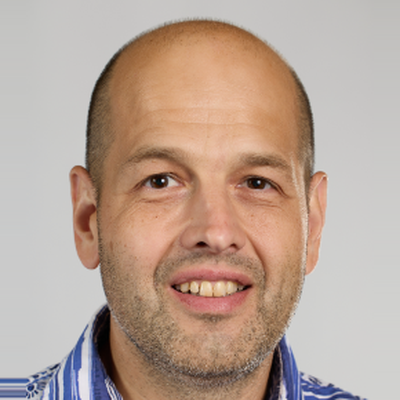
My scientific interests lie at the intersection of computer science, biomedical imaging, and neurodegenerative disease research. I received my Ph.D. in Computer Science in 2003 from the University of North Carolina, where I researched statistical shape analysis and its applications to neuroimaging under the direction of Stephen M. Pizer, Ph.D. I joined the PICSL lab at the University of Pennsylvania Department of Radiology as a postdoc the same year and joined the faculty in 2006. Throughout my career, my research has focused on computational techniques focused on specific, complex anatomical structures and on using postmortem imaging to interrogate these structures in detail. The main thrust of my recent work has been in neurodegenerative disease applications. Our team has developed specialized image analysis techniques and rich detailed probabilistic atlases for the medial temporal lobe, a brain region central to episodic memory and singularly involved in early stages of Alzheimer’s disease. These methods have contributed to biomarkers used to study neurodegenerative disease heterogeneity, track disease progression and response to treatment. My group is also heavily invested into open-source software development, including our flagship tool ITK-SNAP, which has over 8,000 monthly downloads, a family of associated tools for image processing (c3d) and deformable registration (greedy), tools for medial temporal lobe morphometry (ASHS & CRASHS), among others. I co-direct the Neuroimaging Core of the Penn Alzheimer’s Disease Research Center (Penn ADRC), with a specific focus on postmortem imaging and quantitative methods.
Publications
Current Grants
- R01EB039789: Transforming ITK-SNAP into a modern AI-assisted segmentation platform
- R01AG056014: Ex Vivo Imaging of the Aging Brain to Discover Morphology/Pathology Associations
- P30AG072979: Penn Alzheimer’s Disease Research Center, Neuroimaging Core
Past grants are listed on NIH RePORTER (search for “Yushkevich”).
Software
- ITK-SNAP interactive medical image segmentation tool (originally a collaboration with Guido Gerig, Ph.D.)
- Convert3D command-line companion to ITK-SNAP
- Greedy fast deformable image registration
- Automatic Segmentation of Hippocampal Subfields (ASHS)
- CRASHS cortical reconstruction for ASHS
- CM-Rep tools for parametric deformable modeling of object skeletons
- PICSL Multi-Atlas Segmentation Tools (led by Hongzhi Wang, Ph.D.)
- HistoloZee histology and MRI co-registration tool (led by Daniel Adler)
- DTI-TK toolkit for diffusion MRI registration and tract-specific analysis (led by Hui Zhang, Ph.D., UCL)
Search for Paul Yushkevich's papers on the Publications page